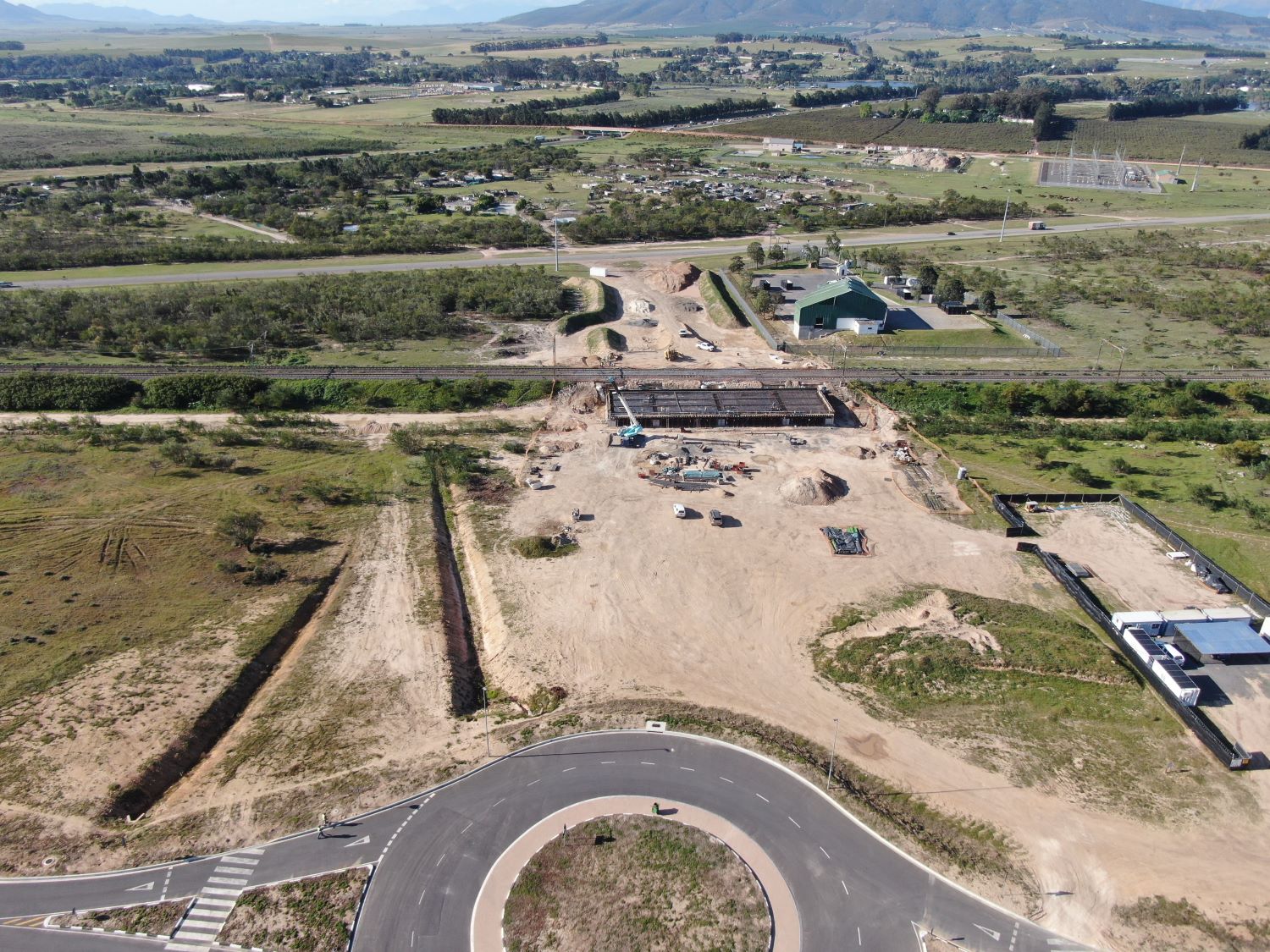
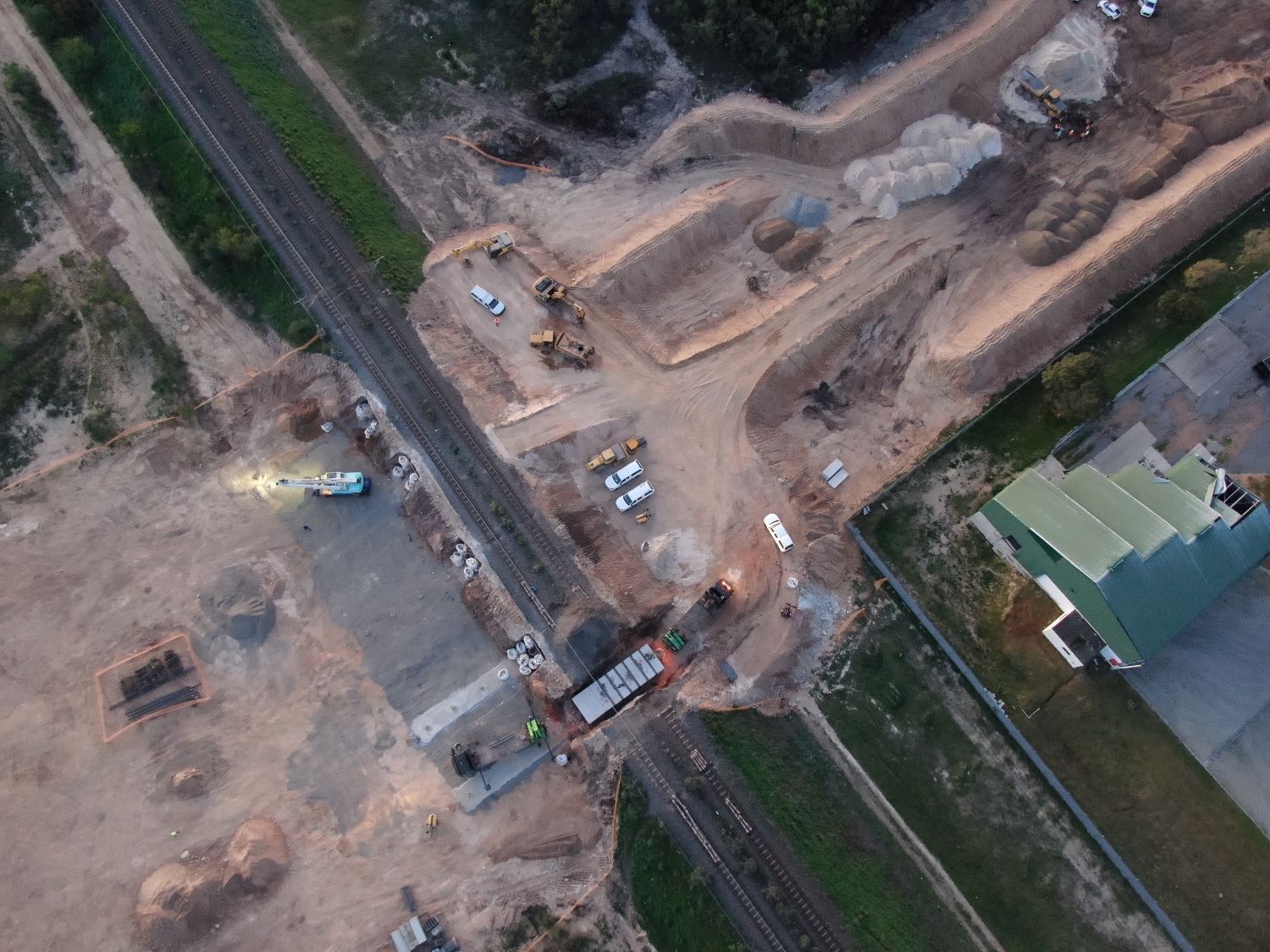
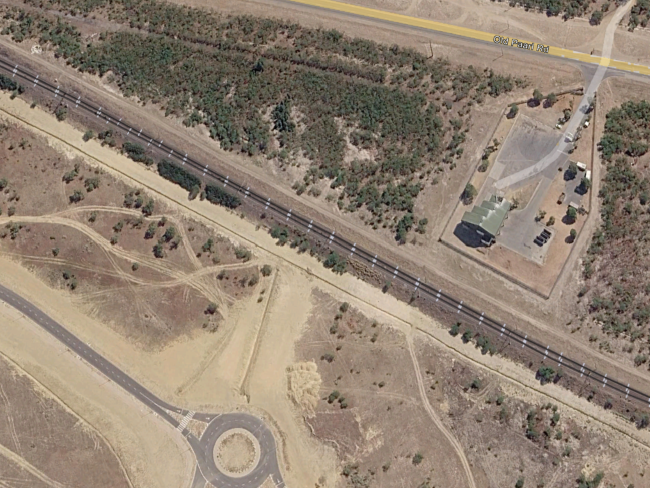
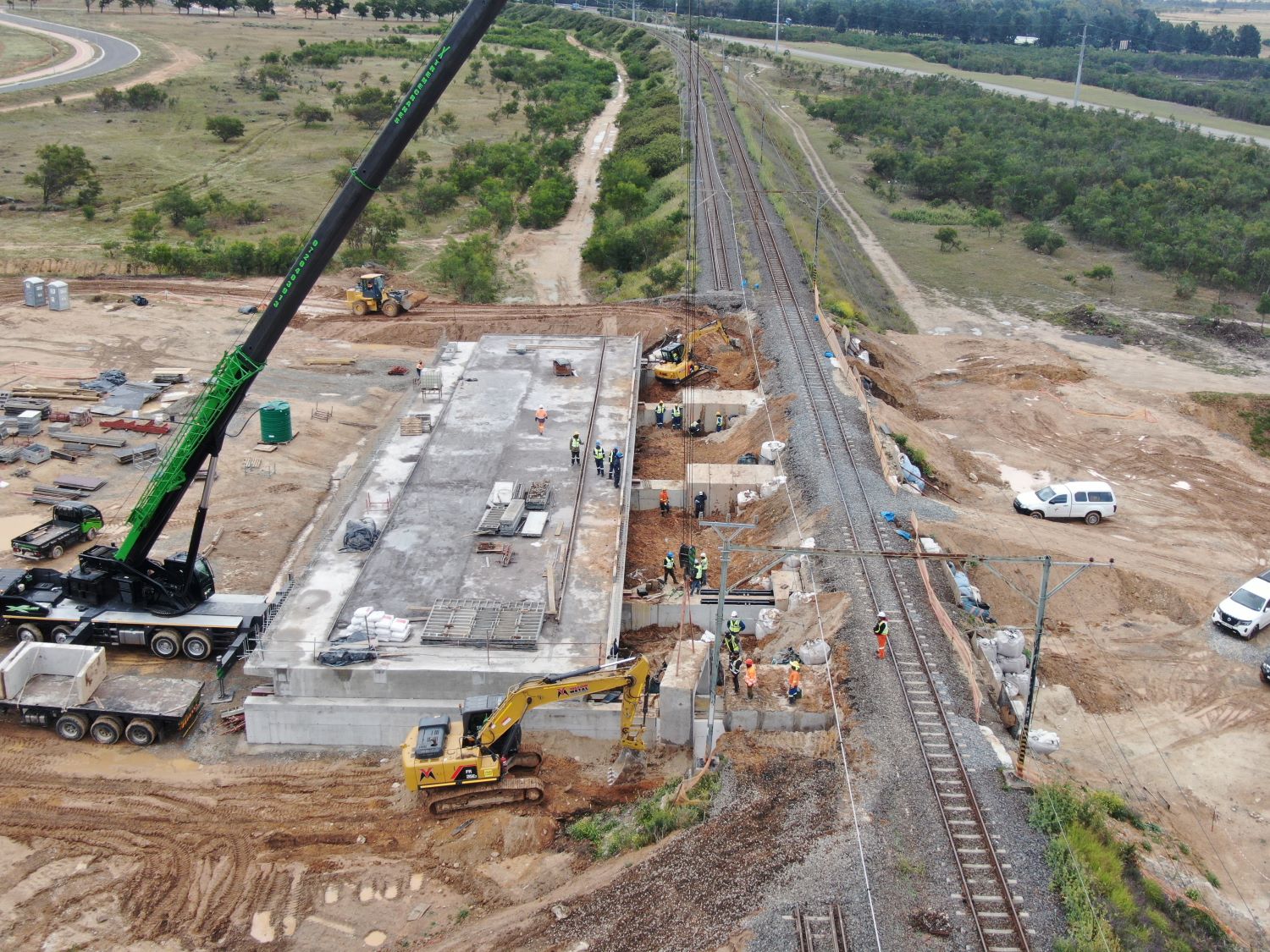
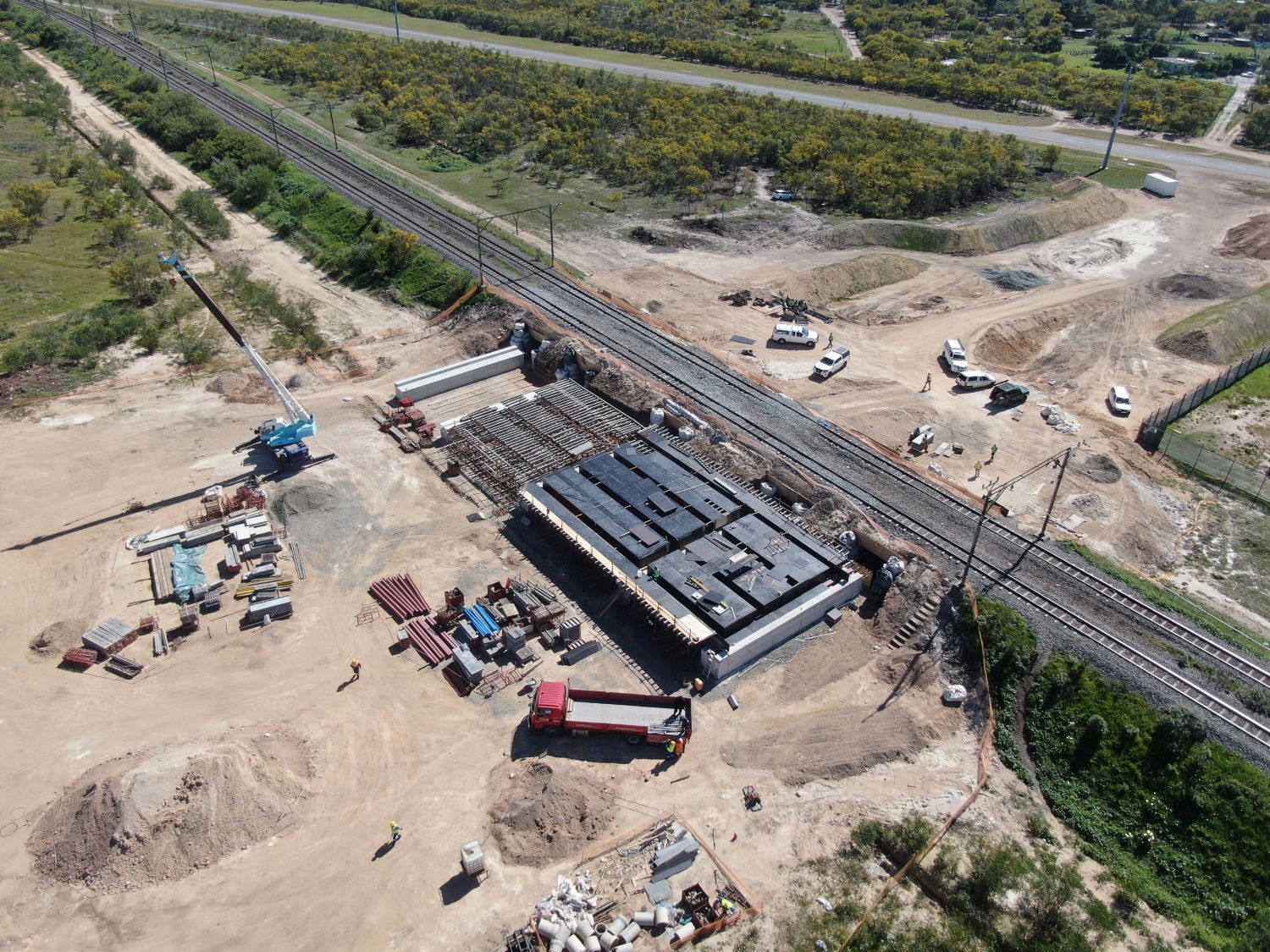
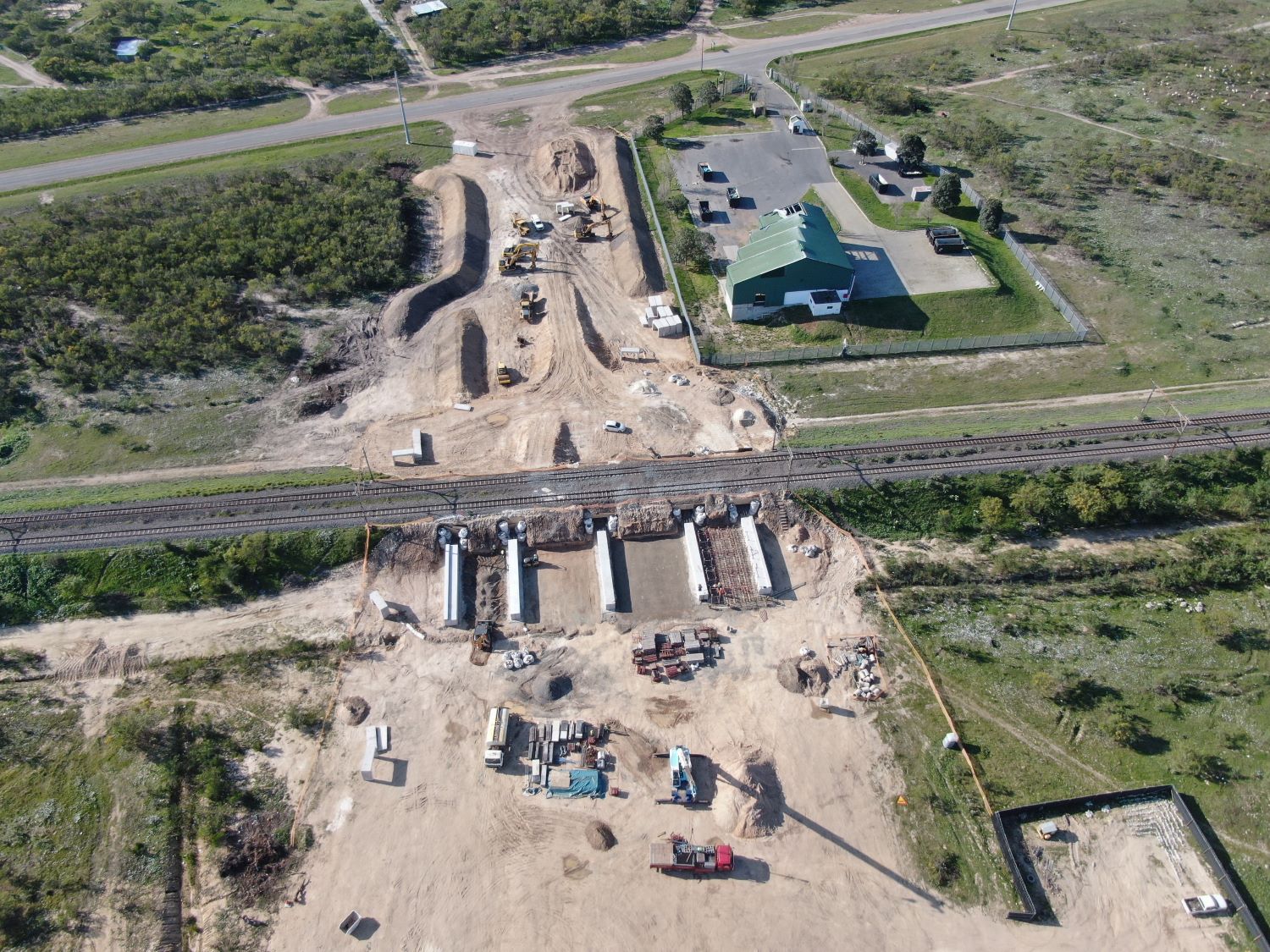
Smart Civils were tasked to construct an underpass bridge underneath the existing two railway lines operated by Transnet and PRASA to allow for the construction of a new underpass access road linking the proposed development (The Bridge) to the Old Paarl road in Klapmuts. The underpass bridge structure had to be constructed whilst the two railway lines are largely operational. The two railway lines are of national economic significance as the line is a link between Cape Town and Gauteng and also used for local commuters.
Scope of Work
Smart Civils offered an alternative design which was based on minimizing railway line shutdowns being required from the Railway authorities for the construction of the Underpass Bridge. The alternative was also more cost effective and resulted in less disruptions to the railway operations. The postulated design comprised of Precast Beams supported on two in-situ longitudinal beams, which are in turn supported directly on the piles. The alternative design comprised an in-situ post-tensioned beams and slab bridge deck supported on capping beams which are in turn supported on the piles.
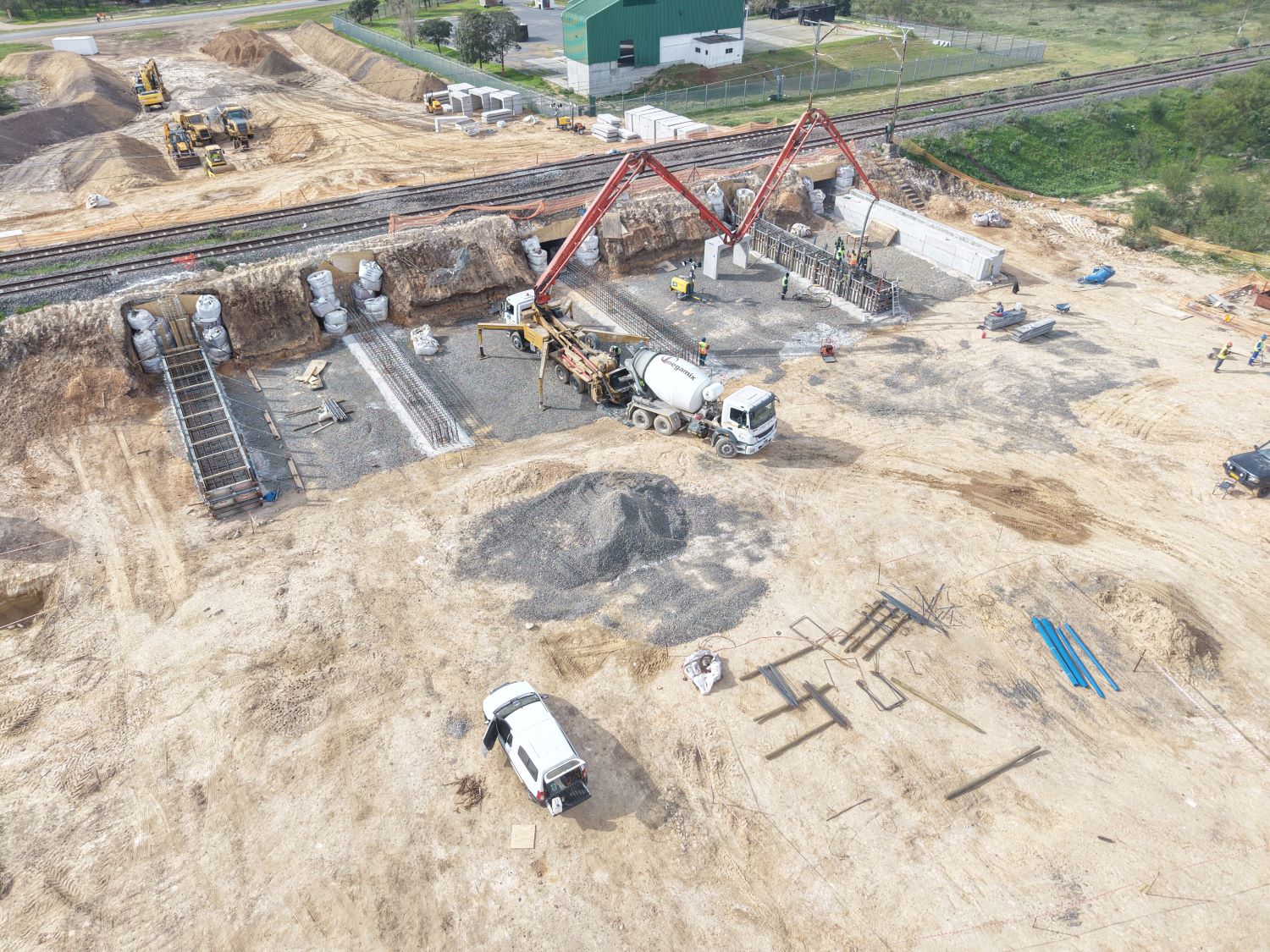
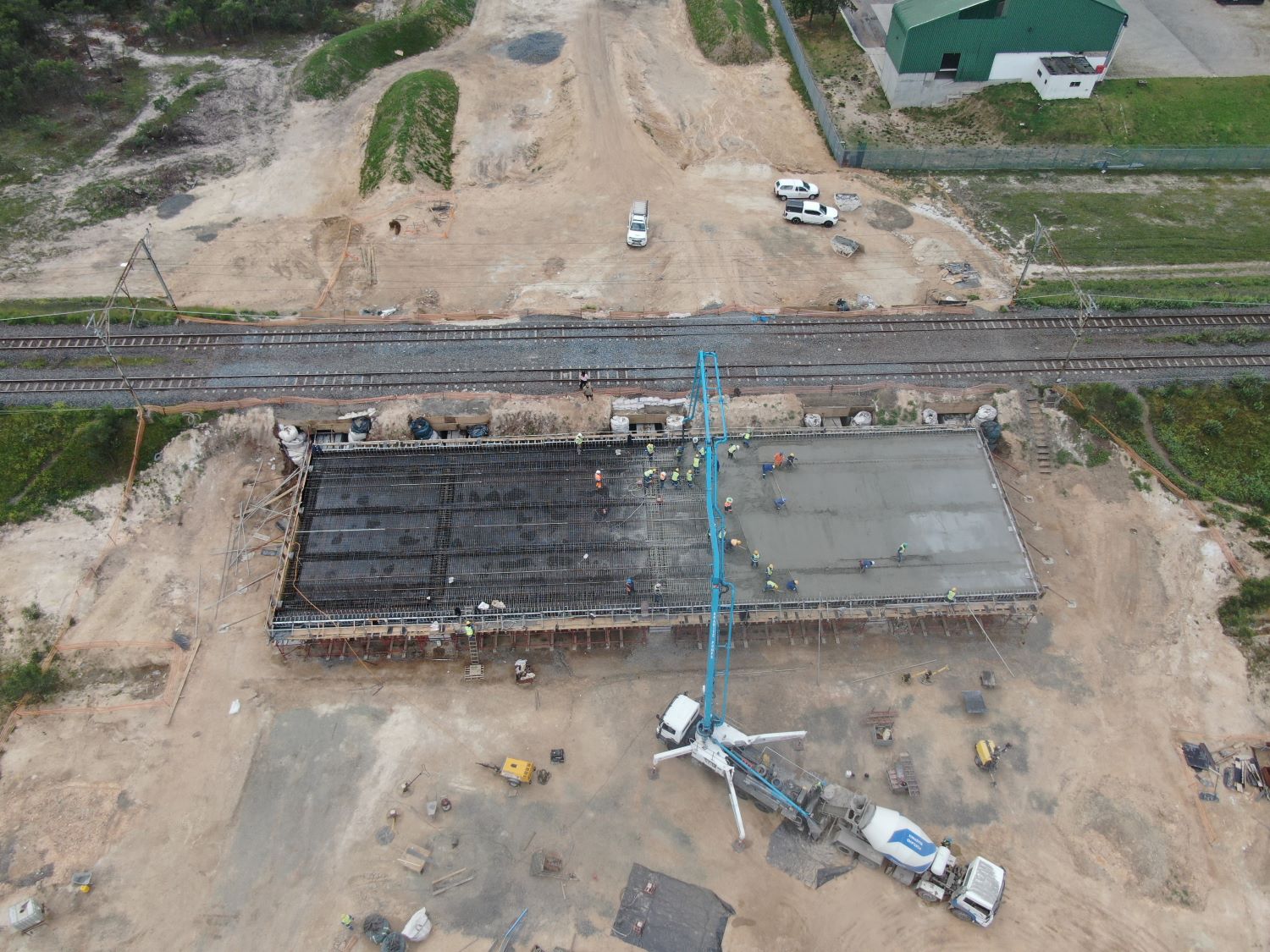
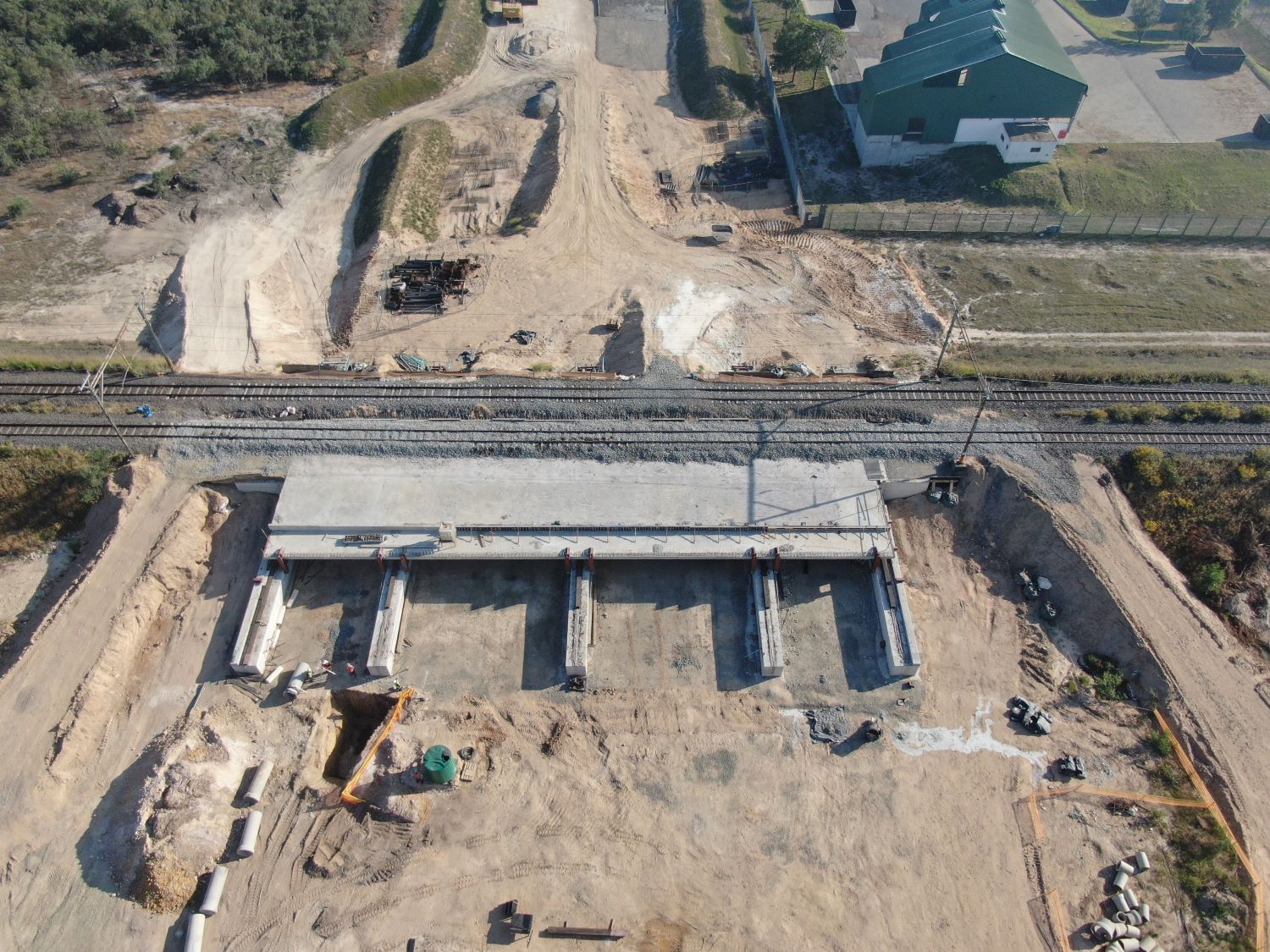
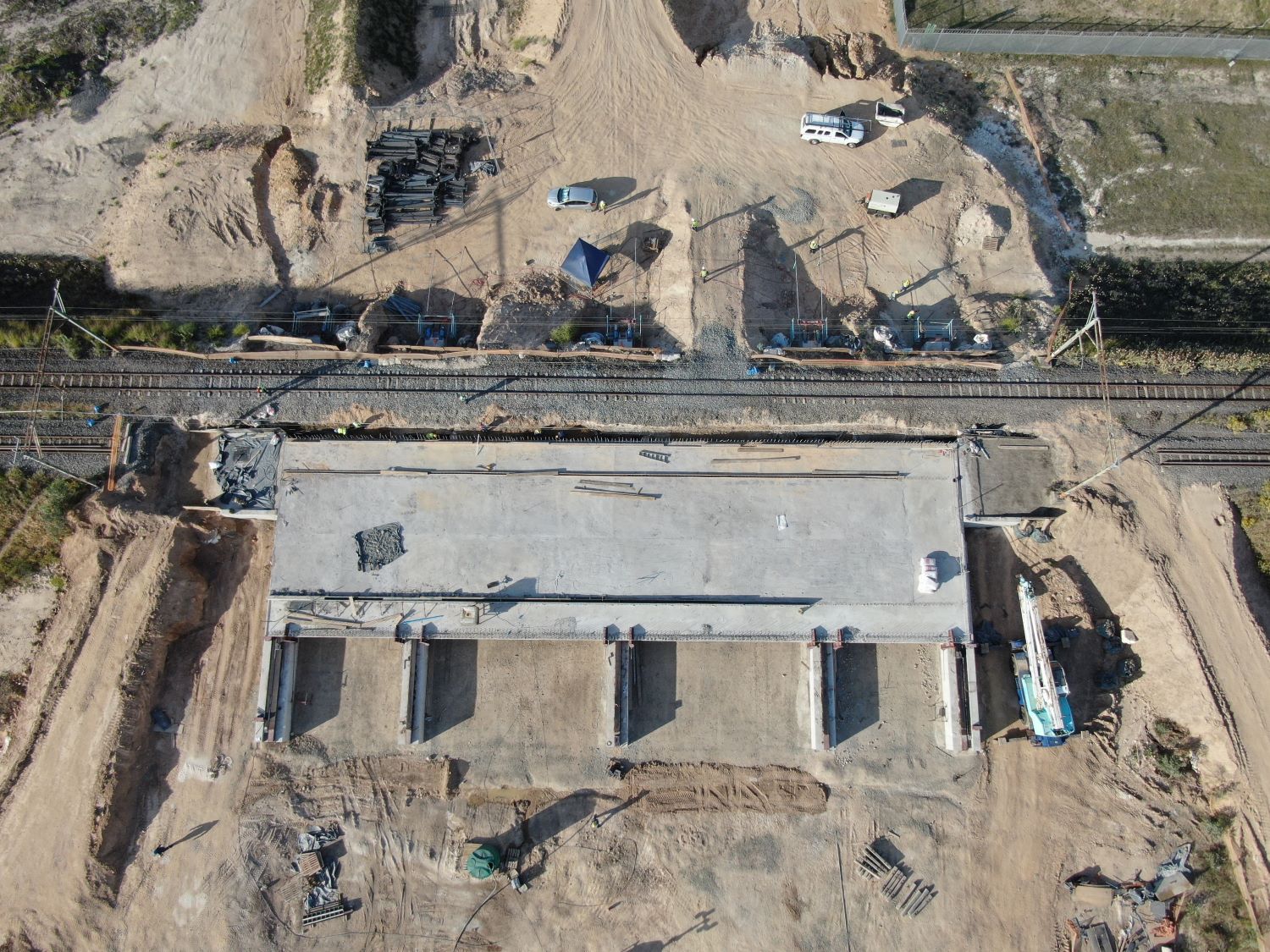
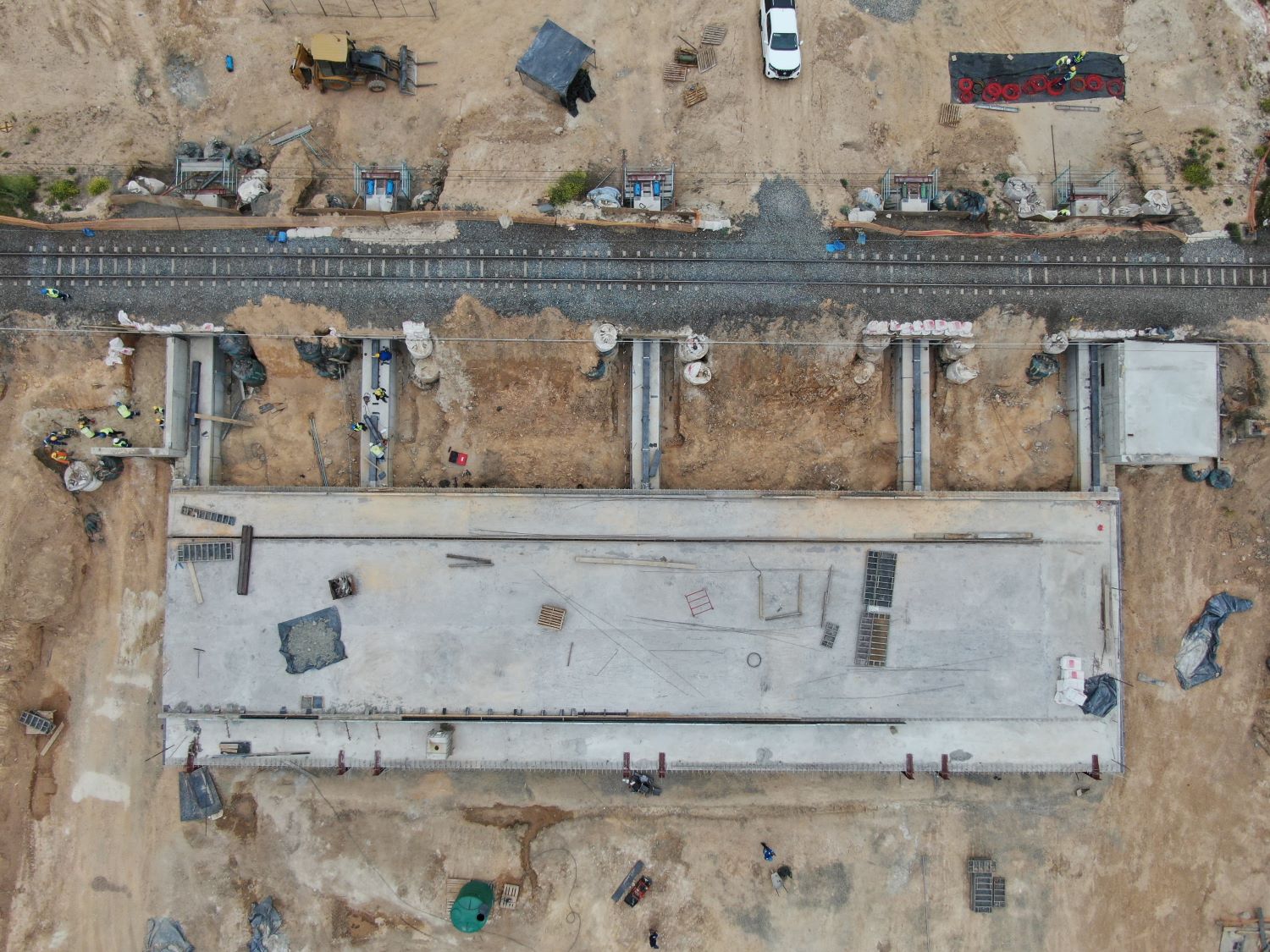
The main feature of the alternative design was that the bridge was to be constructed alongside the railway line with minimum shutdowns and launched sideways into its permanent position. The following are the key activities undertaken by SMART Civils.
Design of the alternative deck
Design of temporary substructure consisting of a piled foundation and reinforced concrete capping beam
Design of permanent capping beam which consisted of a post-tensioned concrete section
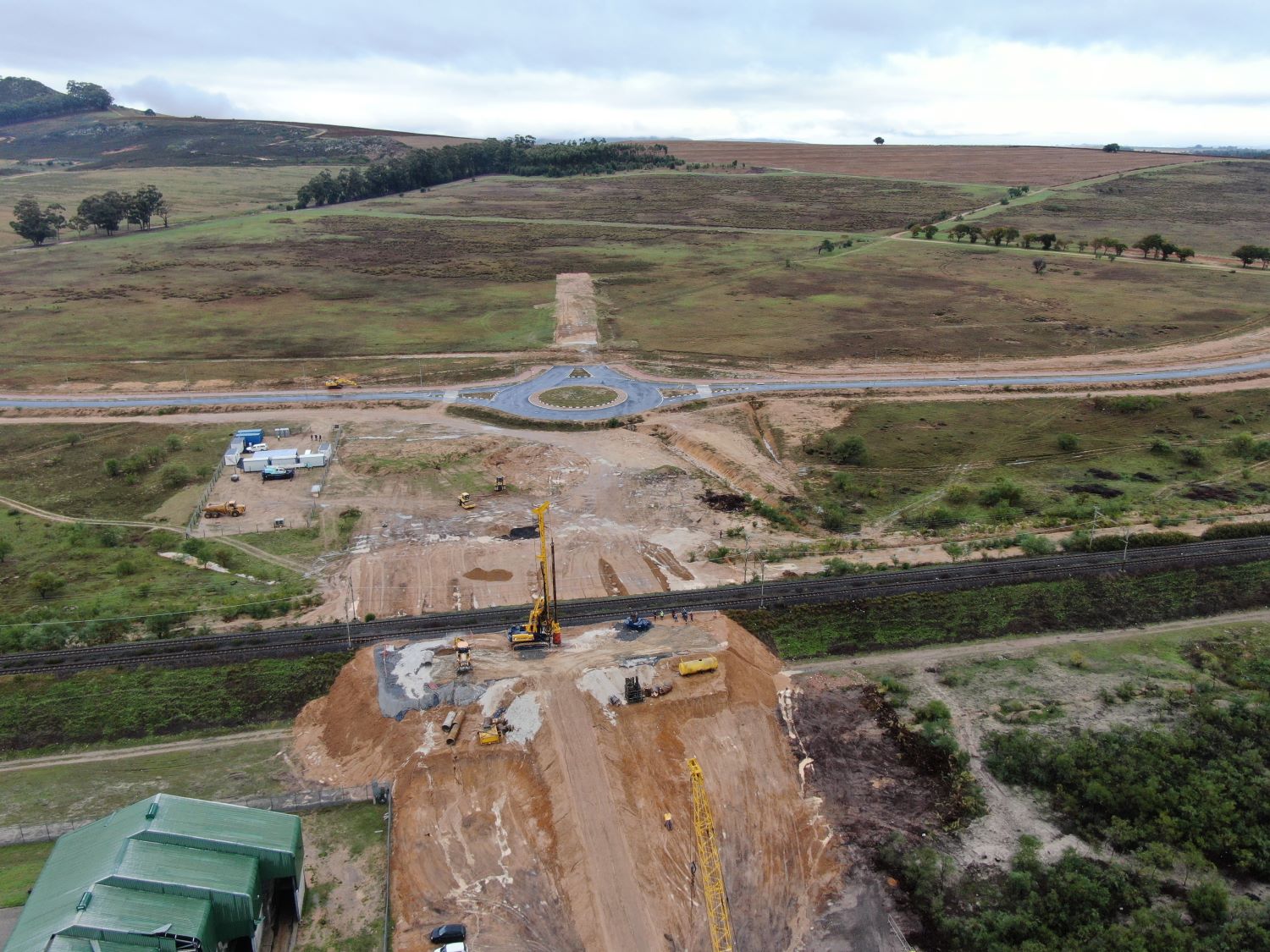
Installation of Permanent Piles and construction of permanent capping beams
Installation of Temporary Piles and construction of temporary capping beams
Construction of temporary culvert underpasses to facilitate construction of the permanent beams
Construction of bridge deck, abutments, approach slabs, ear walls and parapets
Post Tensioning of the Permanent Cross Beams and the bridge deck
Design and Installation of launching equipment
Launching the Bridge into position
Demolition and removal of temporary works
Project Challenges
The Underpass Bridge had to be constructed adjacent to the existing railway lines and then be launched into position. Launching required a horizontal beam on which the deck will slide into its permanent position. This beam will also support the deck in its permanent position. Construction of these beams across the railway formation and embankment posed a serious technical challenge as a void had to be created to allow for access to construct these cross beams. Tolerance for the cross beams is of specific importance because it has an impact on the sliding forces to be catered for.
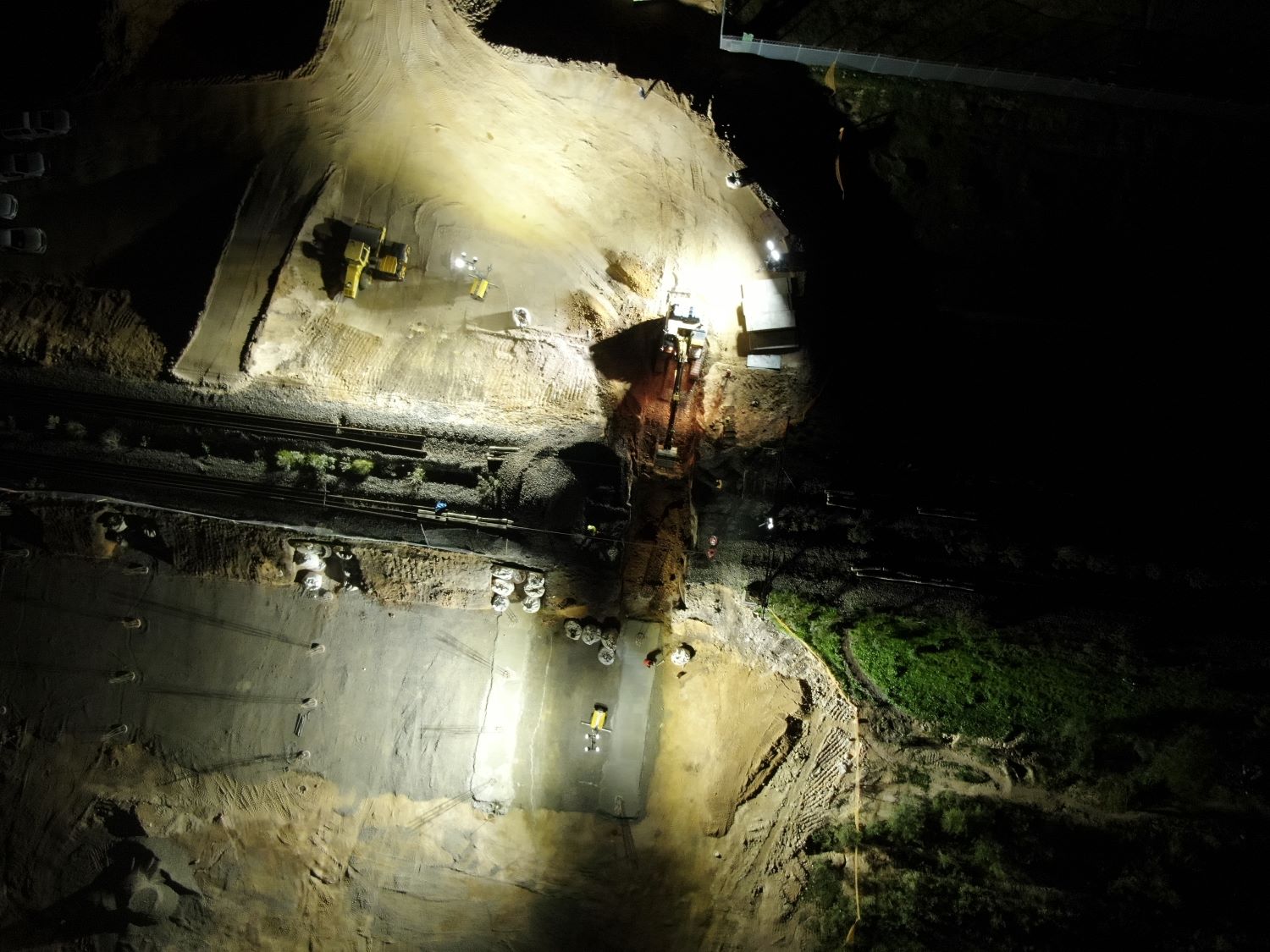
Transnet only grants full shutdowns over weekends, from 21:00 on a Friday until 18:00 on the Sunday. This meant that any work that requires breaking of the railway line, removal of ballast and sleepers, excavation, culvert installation, backfill and reinstatement of the railway lines all had to be done during this window. The other challenge is that the shutdown request must be submitted to Transnet 21 days prior to the shutdown being required. The planning for any work that requires railway line shutdown had to be exact.
All permits were granted on the basis that a full shut down is only available as outlined above. One of the two railway lines had to be always available at all times during the week. This limited the amount of work that could be done during the full shutdown and had an impact of stretching the program.
The two lines are fully electrified and had high voltage lines running along the lines. This meant that there are limitations on the use of Cranes, Piling rigs and Excavators.
Any works on the railway line infrastructure was to be done by a third party. The following activities could only be done by the Railway Authorities: dismantling of the railway lines, removal of ballast and sleepers, and re-instatement of this railway infrastructure.
Execution Highlights
There were numerous challenges on this project, but Smart Civils managed to overcome them with the input of several highly experienced individuals within the team.
The first challenge was the postulated design methodology. This required longer occupations and was viewed as a potential serious risk. The requirement for the use of heavy sheet piling installation in particular created serious potential challenges. This challenge was dealt with by the alternative design, which required shorter and lesser occupations.
The creating of the voids to allow for the permanent cross beams construction across the railway formation and embankment was the first major challenge. After various proposals were tabled, it was decided that the installation of the culverts would be the most efficient solution, posed the least safety risk and would have minimal impact on railway operations.
The other challenge with works that encroach onto the railway reserve was to ensure the applications for shutdowns from Transnet was submitted timeously and that we stick to the programme as any delays would result in a 21 day delay due to the notice period to Transnet for shutdowns.
The next challenge was to determine the best methodology for launching the bridge. Smart Civils consulted with an expert bridge engineer and together with consultations within the team it was decided to construct the bridge on top of steel I-Beams that the bridge would “slide” on.
We also faced a challenge of launching the bridge with minimal impact to Railway operations. It was decided to launch the bridge in two stages, stage 1 being to approximately halfway to enable Transnet to reinstate the railway on top of the deck and put it back into commissioning prior to granting the next shutdown to allow for preparation for the second and final launch. A full shutdown had to be requested for the final launch as the bridge couldn’t be jacked under traffic. The logistics of the final launch, coupled with the full occupation resulted the team being left with 12 hours to launch the bridge into the final position as the railway lines had to be reinstated in order for passenger services to resume as soon as possible.
The launching of the bridge had to be monitored closely as the abutments were constructed prior to launching the bridge. Sensors were attached to the outside edges of the bridge to ensure the bridge doesn’t go out of alignment during the launch, an issue that could cause it to wedge against the abutments.
The Bridge: The Construction of the New Underpass, Road and Traffic Circle on the Old Paarl Road and Associated Engineering Services, Klapmuts
The Bridge: The Construction of the New Underpass, Road and Traffic Circle on the Old Paarl Road and Associated Engineering Services, Klapmuts
The Bridge: The Construction of the New Underpass, Road and Traffic Circle on the Old Paarl Road and Associated Engineering Services, Klapmuts
The Bridge: The Construction of the New Underpass, Road and Traffic Circle on the Old Paarl Road and Associated Engineering Services, Klapmuts
The Bridge: The Construction of the New Underpass, Road and Traffic Circle on the Old Paarl Road and Associated Engineering Services, Klapmuts
The Bridge: The Construction of the New Underpass, Road and Traffic Circle on the Old Paarl Road and Associated Engineering Services, Klapmuts
The Bridge: The Construction of the New Underpass, Road and Traffic Circle on the Old Paarl Road and Associated Engineering Services, Klapmuts
The Bridge: The Construction of the New Underpass, Road and Traffic Circle on the Old Paarl Road and Associated Engineering Services, Klapmuts
The Bridge: The Construction of the New Underpass, Road and Traffic Circle on the Old Paarl Road and Associated Engineering Services, Klapmuts
The Bridge: The Construction of the New Underpass, Road and Traffic Circle on the Old Paarl Road and Associated Engineering Services, Klapmuts
The Bridge: The Construction of the New Underpass, Road and Traffic Circle on the Old Paarl Road and Associated Engineering Services, Klapmuts
The Bridge: The Construction of the New Underpass, Road and Traffic Circle on the Old Paarl Road and Associated Engineering Services, Klapmuts
The Bridge: The Construction of the New Underpass, Road and Traffic Circle on the Old Paarl Road and Associated Engineering Services, Klapmuts