Projects
- Home
- Projects
Velddrif, Western Cape
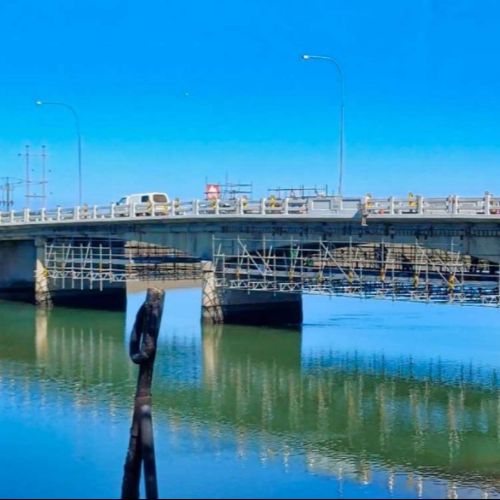
Structural Holding Measures At Carinus Bridge (B2918) Over Berg River At Velddrif
- Client: Western Cape Government
- Consulting Engineers: AECOM
- Subcontractor: Smart Civils
- Duration: 8 months (Jan 2025 – Aug 2026)
- Contract Value: R18 million
Project Overview
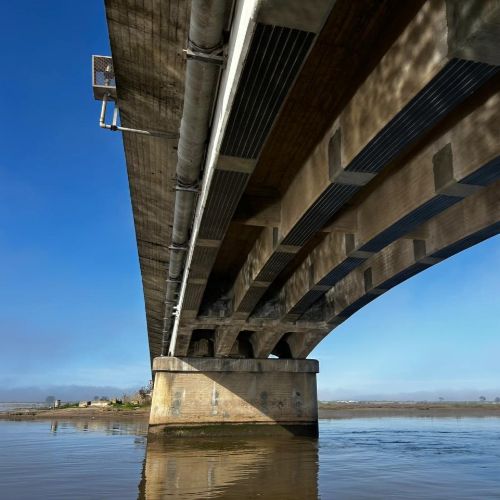
The Carinus Bridge, spanning the Berg River near Velddrif, serves as a critical transport link for the West Coast peninsula. Over time, inspection and condition assessments revealed significant structural deterioration in key components of the main span — particularly at the half-joints and diaphragm elements. In response, the Western Cape Government (Transport Infrastructure Branch) commissioned a structural holding / strengthening intervention to stabilise, rehabilitate and extend the service life of the existing bridge until a full replacement can be implemented. The design and oversight consultant was AECOM SA, and Smart Civils was appointed as the main contractor.
The project achieved an impeccable safety record with no Section 24 incidents or accidents reported and gained industry recognition, including “Highly Commended” awards for both specialist suppliers and consulting engineers in the 2024 Best Projects Awards.
Scope of Work
As main contractor, Smart Civils was responsible for the full execution of the works, under the design and specification of AECOM, and in coordination with specialist suppliers (notably Sika South Africa). The scope included:
-
Investigation
Detailed condition investigation, non-destructive testing and structural assessment (in collaboration with AECOM). -
Accommodation of traffic
Implementation of temporary restraints over the bridge deck and means to prevent excessive loading of the deck during works. -
Rehabilitation of the half-joints and Spall Repairs
injection of proprietary cementitious grout into joints, removal of deterioration and spalling concrete in halving joints and the restoration of geometry. Repair of spalling concrete on localised elements. -
Carbon Fibre
Installation of external and near-surface mounted (NSM) carbon fibre reinforcement (CFRP plates / fabrics) to strengthen hogging and sagging zones of the main span in partnership with Sika as main supplier for advanced structural materials such as Sika Carbodur plates and SikaWrap fabrics and Sikadur adhesives. -
Dywidag Bar Installation
Strengthening and thickening of diaphragms by core-drilling and inserting high-strength Dywidag thread bars in the transverse and longitudinal direction of the bridge. -
Casting reinforced concrete
Thickening diaphragms by means of concrete pouring through the bridge deck from road level into forms constructed below the deck at the diaphragms.
Project Challenges
-
Structural complexity & continuity constraints
Because the bridge remained in service (or at least under constrained use), interventions had to avoid imposing undue loads or displacements during construction. The drop-in span and half-joint configuration meant that temporary restraint systems had to be carefully staged to avoid destabilisation. -
Accommodation of Traffic
Given that the bridge is a critical transport link for the West Coast Peninsula, large volumes of heavy vehicular traffic had to be controlled and restrained over the bridge while works were underway. -
Interface with environmental constraints
Because works were carried out over the Berg River, strict measures were required for containment of drilling debris, concrete washout, epoxy adhesive spills, and runoff in an estuarine functional zone. Suspended access scaffolding was used to minimise disturbance to the riverbed and had to take into account maritime traffic -
Schedule and safety
Working within tight windows and coordination with traffic and river flow imposed a compressed programme. Ensuring zero incidents or Section 24 reportable events was a critical requirement. -
Material bonding and long-term durability
Ensuring proper adhesion of CFRP systems to existing concrete with possible microcracking, moisture, and chloride ingress required rigorous surface preparation, curing regimes, and quality control.
Execution Highlights
Works had to be executed sequentially to ensure safety and structural integrity of the bridge.
- i. Erection of access platforms
- ii. Carbon fibre strengthening
- iii. Rehabilitation of halving joints and preparation of stress bar sleeves
- iv. Casting of diaphragm thickenings
- v. Installation and tensioning of stressing bars
- vi. Coating of steel and concrete elements
- vii. Reinstating asphalt and road markings
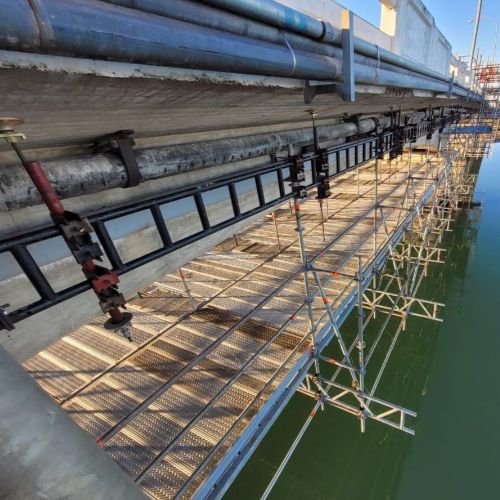
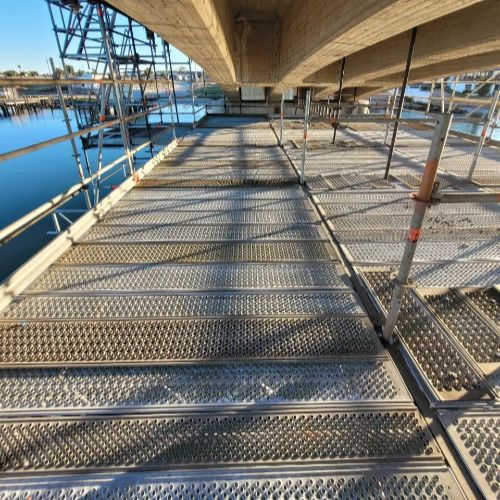
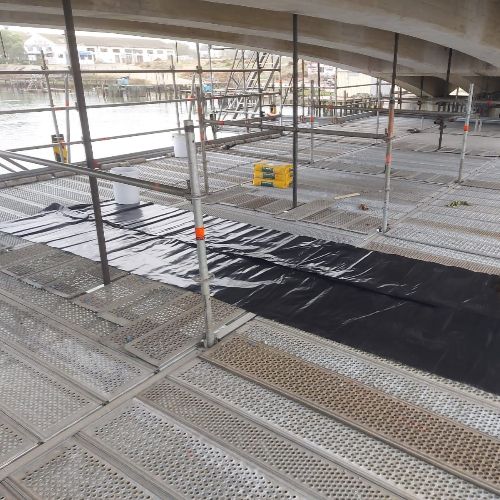
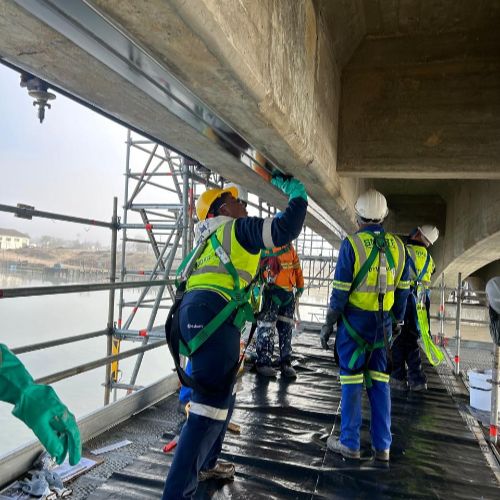
Access to the bridge soffit and beam areas was made possible through suspended scaffolding systems erected by Alpine Scaffolding. The platforms were supported by Dywidag anchors and locking nuts installed through the bridge deck’s median and sidewalks. Special slots were cut in the deck for the top anchors and later reinstated after use.
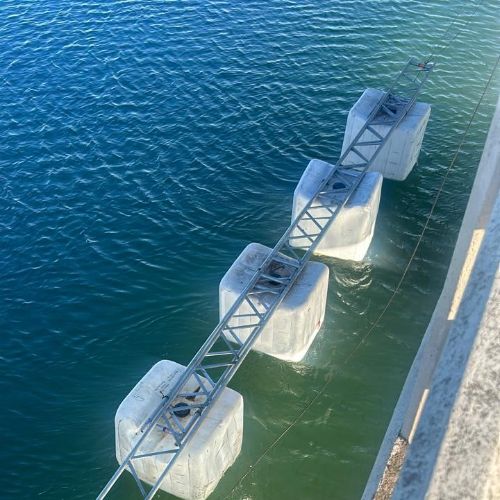
Scaffold sections were cantilevered from the sidewalks and also assembled from floating pontoons positioned beneath the bridge. The entire access system was fully sheeted with heavy-duty plastic lining, forming an environmental containment system to capture all debris, epoxy residues, and construction waste — effectively preventing contamination of the river below.
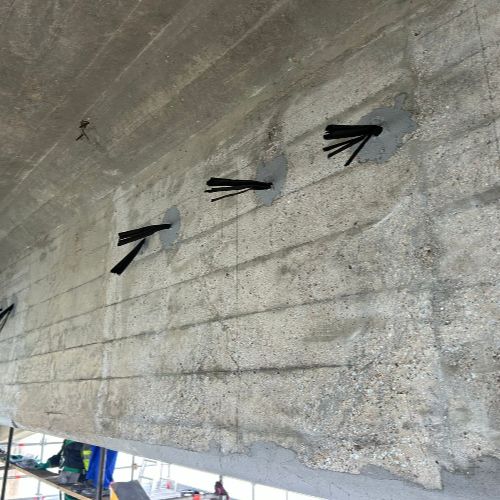
Extensive carbon fibre strengthening was undertaken to improve both the deck and soffit capacity of the bridge. The works included the installation of Sika Carbodur S626 and S2.025 carbon fibre plates and wraps, renowned for their tensile strength exceeding 3,000 MPa and modulus of elasticity of 170 GPa.
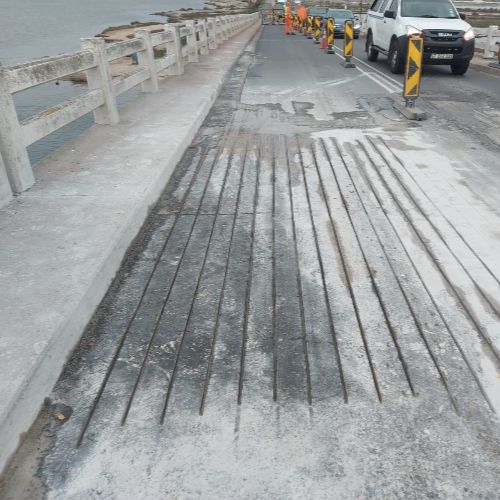
Concrete surfaces were carefully prepared by abrasive cleaning and high-pressure water jetting to ensure proper adhesion. Carbon fibre fan anchors were drilled and epoxied into position, after which the carbon fibre wraps were applied over the plates to provide additional reinforcement. On the deck surface, asphalt was milled off to install near-surface mounted (NSM) carbon fibre plates above the halving joints. Slots were saw-cut into the deck, the plates epoxied in place, and the surface reinstated in half-widths to maintain traffic flow. The strengthened areas were finished with a protective Sikagard 550W coating (light grey) on the external bridge edge beams to enhance long-term durability against environmental exposure.
Repairs to the bridge’s half joints and spalled concrete elements were executed from cantilevered platforms beneath the deck. All deteriorated concrete was cut back to sound material, and exposed reinforcement was cleaned and treated before being reinstated with high-performance repair mortars and structural epoxy grouts. Loose concrete at the halving joints was removed, and epoxy sealing and grout injection were carried out from the deck surface to fill and stabilise internal voids before stressing operations commenced. These rehabilitation measures reinstated the integrity of the joints and ensured full structural continuity between existing and new materials
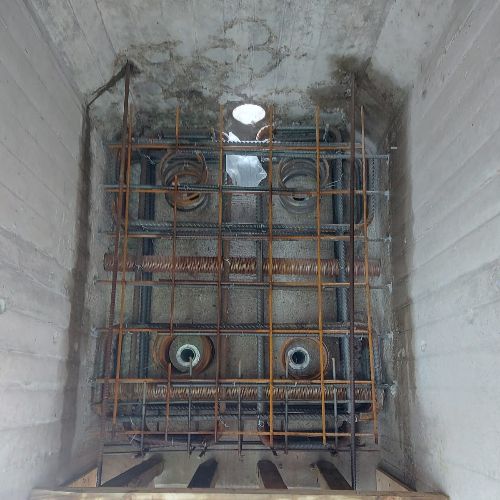
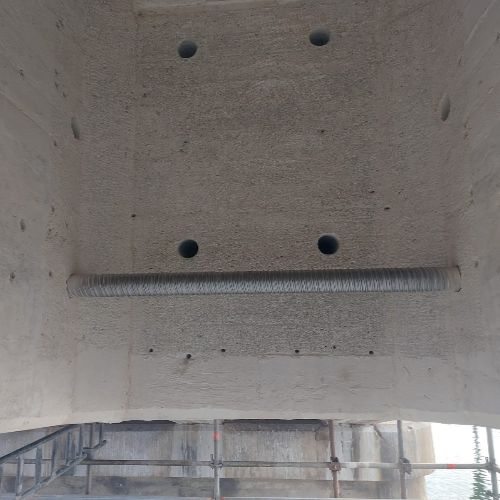
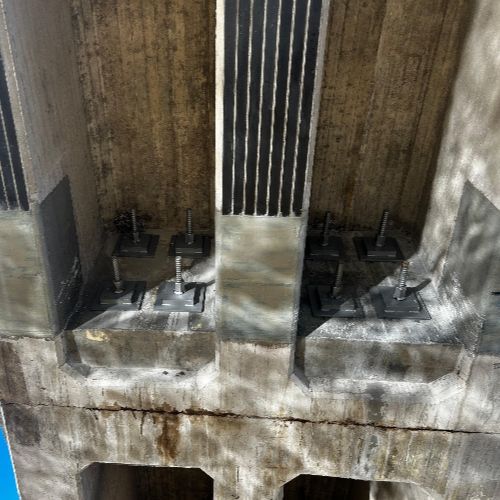
To enhance structural continuity at the halving joints, a system of transverse and longitudinal Dywidag stressing bars was installed. A total of 32 transverse cores, each approximately 575 mm in length, were drilled through the bridge beams to accommodate 6.3 m long Dywidag bars threaded through precision-aligned sleeves.
Bars were inserted from the deck edges using ropes and scaffold access platforms before being stressed and locked off with steel anchor plates and corrosion-protected end caps. In addition, 24 longitudinal cores of 900 mm diameter were drilled through the diaphragms to install the longitudinal stressing system. The bars were tensioned in stages once the grout in the halving joint expansion gap achieved a strength of 20 MPa and after the diaphragm thickenings were cast. All exposed bar ends and components were finished with anti-corrosive paint systems for long-term protection, particularly against the coastal environment.
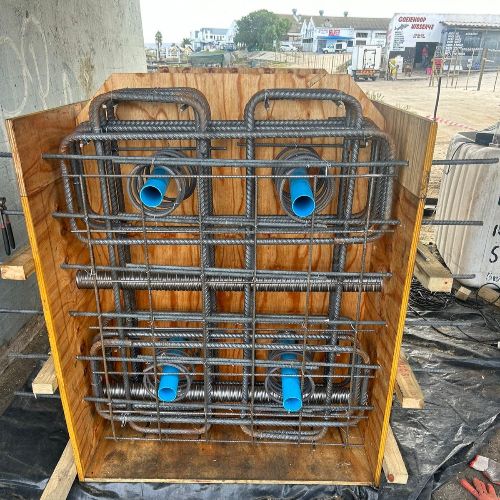
The thickening the existing diaphragms were conducted to increase stiffness and load-carrying capacity. A mock up of the diaphragm thickenings was made to test concrete mix design performance and the formwork for the proposed thickenings. After the core drilling and installation of sleeves and dowels anchored with chemical anchors, formwork was constructed, and the new sections were cast using Class 40/10 shrinkage-compensated self-compacting concrete containing 2% shrinkage-reducing admixture.
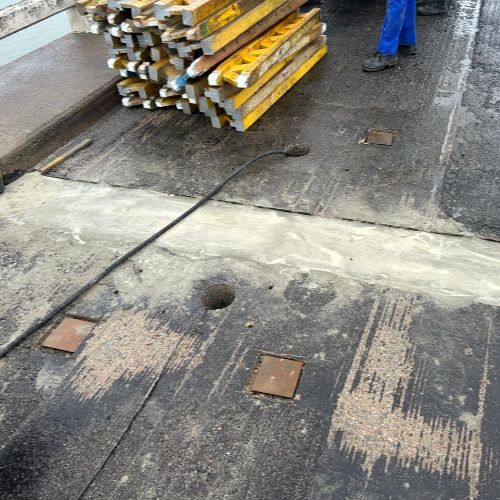
The concrete was poured from the deck through 150 mm core openings, with smaller 20 mm vent holes provided to release trapped air and ensure full compaction. Surface preparation was achieved by high-pressure water jetting and concrete surface scabbling, guaranteeing a strong bond between new and existing concrete.