Projects
- Home
- Projects
Storms River Mouth, Eastern Cape
Maintenance and Rehabilitation of the Suspension Bridges at the Storms River
- Client: SANParks
- Consulting Engineers: SMEC
- Subcontractor: Chimp and Zee
- Duration: 10 months, 09 July 2025, 26 June 2026
- Contract Value: R17.9 million
Project Overview
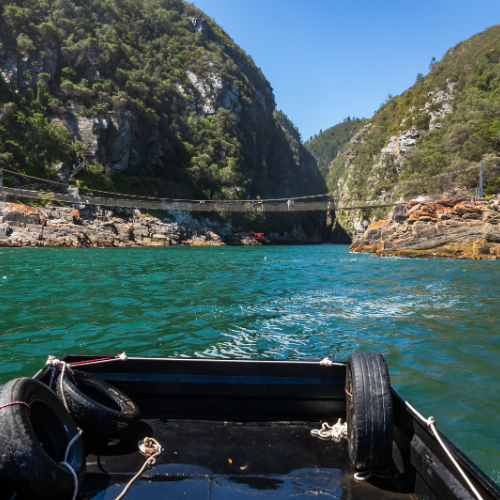
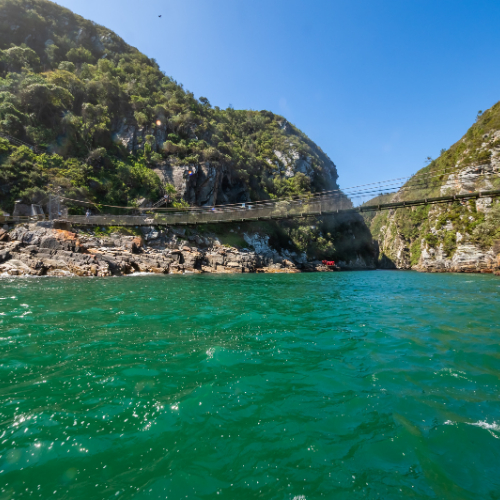
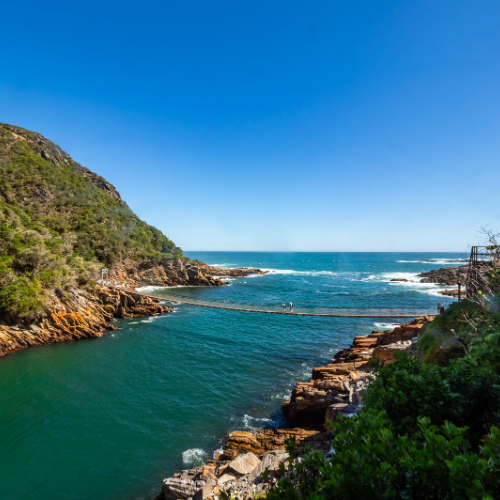
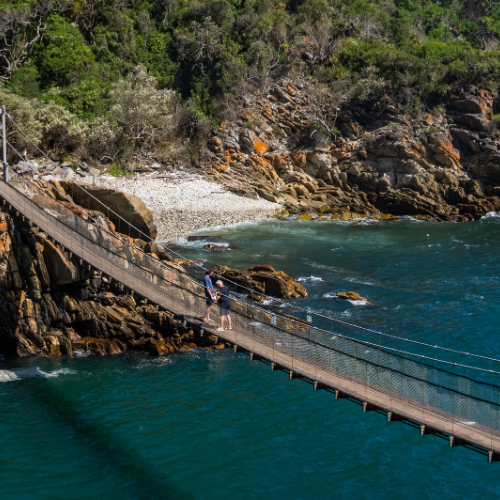
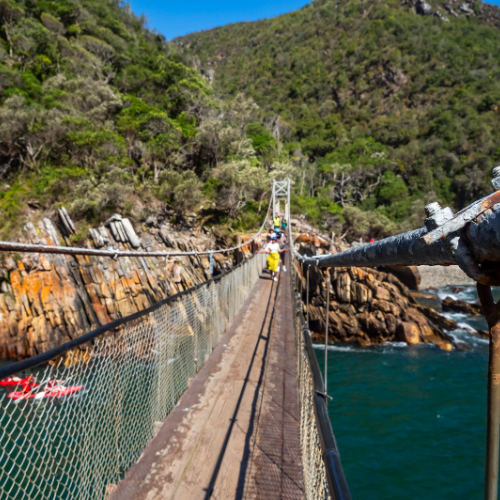
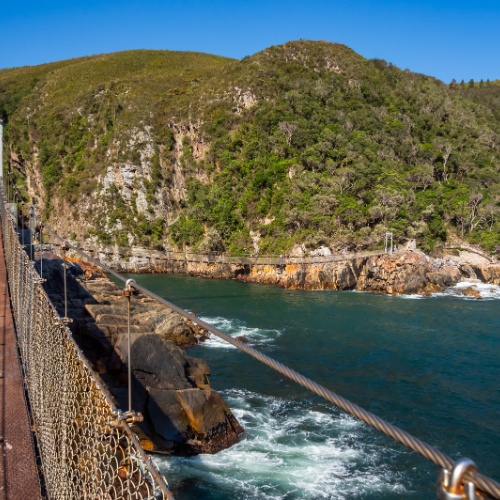
The suspension bridges at Storms River Mouth are a central feature of the Tsitsikamma Section of the Garden Route National Park in the Eastern Cape, South Africa. This iconic attraction offers visitors an exhilarating experience and breathtaking views of the dramatic coastline where the Storms River meets the Indian Ocean.
The main suspension bridge was originally constructed in 1969 with a significant reconstruction occurring in the mid-2000s by South African National Parks (SANParks).
Due to the exposure to harsh coastal weather conditions, the original materials used to construct the bridges has deteriorated over time to a point where total replacement was required . Bridges was replaced with modern materials and construction techniques that ensured durability, stability, and safety. The installation method also prioritized minimal disruption to the environment and tourist activities during the construction and refurbishment work.
Scope of Work
-
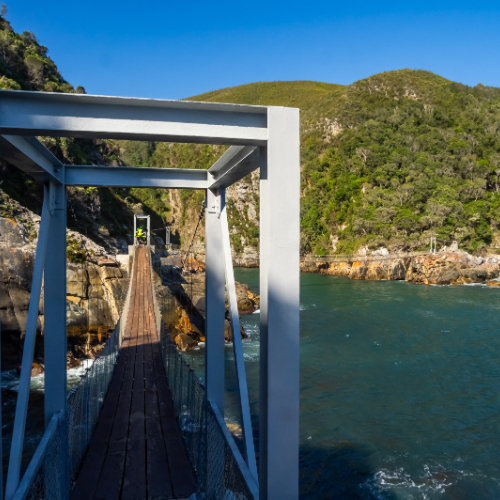
Rehabilitation of the steel substructures
All steel structures shall receive a new protective coating system. All steel components must be cleaned using Carboclean 250 to remove all surface contaminants. Existing coatings without visible rust should be lightly scuffed, while areas showing visible rust must be cleaned to bare metal using a Bristle Blaster. Surfaces prepared to bare metal shall receive a primer coat of Carboguard 550, followed by two intermediate coats of Carboguard 880. Finally, the entire steel structure will be finished with a topcoat of Carbothane 317. All severely corroded members will be replaced. Corroded flanges shall be cut off and replaced with new flanges using full penetration welds. All new steel components must be galvanized and receive the complete coating system as specified above. -
Rehabilitation of concrete structures
All deteriorated and spalled concrete shall be removed and repaired using SikaMonotop 412. Where corroded reinforcement is encountered, the rebar must be exposed until sound steel is reached, then cleaned and treated with a protective coating of Sika Armatec 110. Concrete surfaces shall be cleaned using high-pressure water to remove all contaminants before applying a corrosion inhibitor (Sika Ferrogard 903), followed by a protective coating of Sikalastic 152. -
Replacement of superstructures
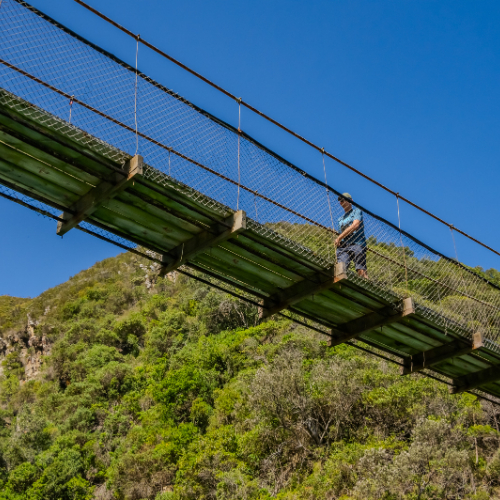
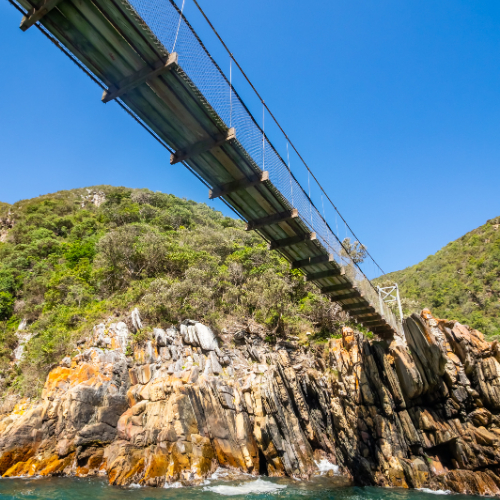
All three suspension bridges will be removed and replaced. This scope includes the installation of new stainless-steel components in place of existing steel elements, new walkway boards, side netting, and load barriers. Most of the replacement materials will be sourced locally, with the main cables supplied by Fatzer in Switzerland.
Project Challenges
-
Access to site
The site is accessible only via the trail or by river. -
Environmental constraints
All work had to be carried out over the river. -
Access to work area
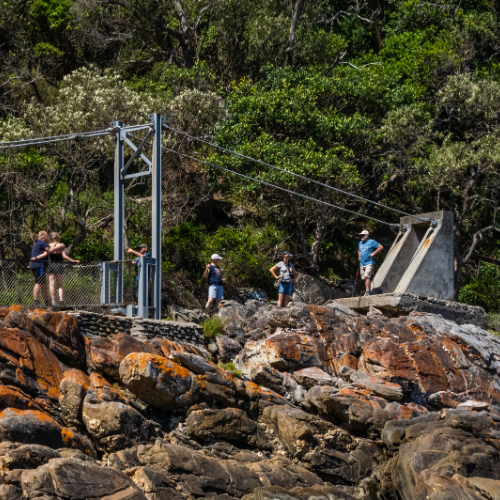
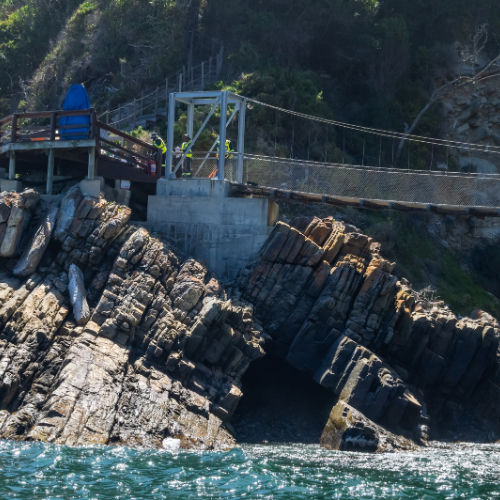
Only access point to do work was the concrete abutments. -
Tourist attraction
The bridges are located within one of SANParks’ most iconic and busiest parks, where the suspension bridges are a major tourist attraction.
Execution Highlights
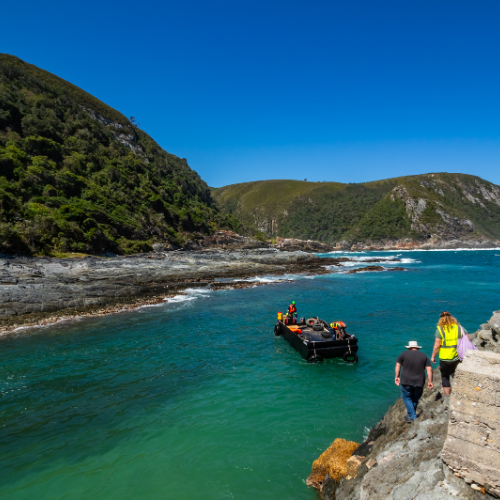
To facilitate river access, a custom-designed barge was built specifically for this project. The barge will be used to transport materials to the site and remove rubble and dismantled components. Due to the site’s proximity to the ocean, all barging operations require careful planning to account for tidal conditions
Since the works are being carried out over the Storms River, strict measures were implemented to prevent any debris from falling into the river and contaminating the water. To minimize environmental impact, only existing walkways, jetties, and stone beaches were used for mooring the barge.
Because the bridges are located over the river, all work had to be executed from the bridge abutments. Removed materials were transported to one of the abutments, and all new materials were installed from these access points.
All bridges could not be closed simultaneously and had to be replaced in phases. Initially, Bridges 2 and 3 (the smaller bridges) were closed and replaced while Bridge 1 (the main bridge) remained open for visitors. Once Bridges 2 and 3 were completed and reopened to provide tourist access, Bridge 1 was then closed and replaced.