Projects
- Home
- Projects
Kathu, Northern Cape
Dirty Water Tank Remedial and strengthening at Khumani Mine
- Client: Assmang Khumani Mine
- Consulting Engineers: Robberts & Marshall
- Subcontractor: Smart Civils
- Duration: 11 months (March 2024- February 2025)
- Contract Value: R9.9 Million
Project Overview
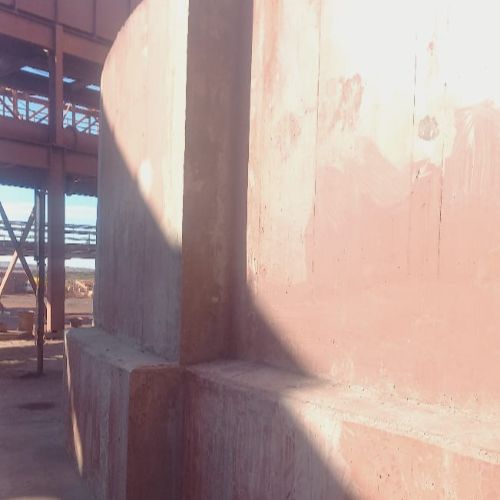
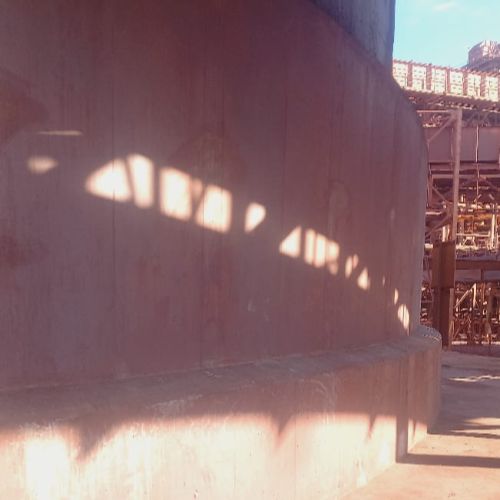
The Dirty Water Tank (DWT) at Khumani Parsons Mine was constructed in 2008. It has an internal diameter of 30 m and a wall height of 9,981 m. The wall is 300mm thick and consists of a four buttress post tensioned system. The wall had moved on its sliding bearing to the extent that cracks had formed in the walls. The movement was caused by the unsymmetrical built-up of fines inside the tank. The walls of the tank required substantial repairs as well as strengthening/confinement which had to be done within the confines of the existing infrastructure and had to occur without any disruptions to the normal daily operations
Scope of Work
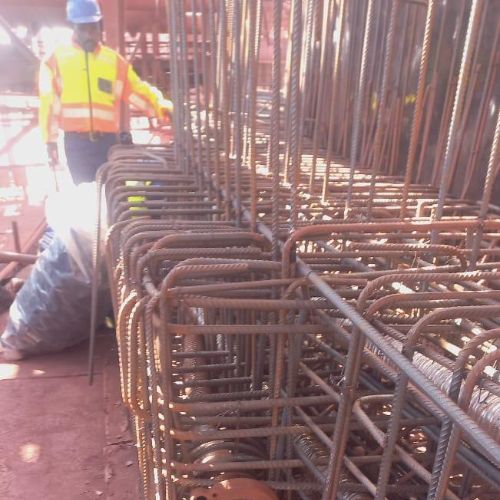
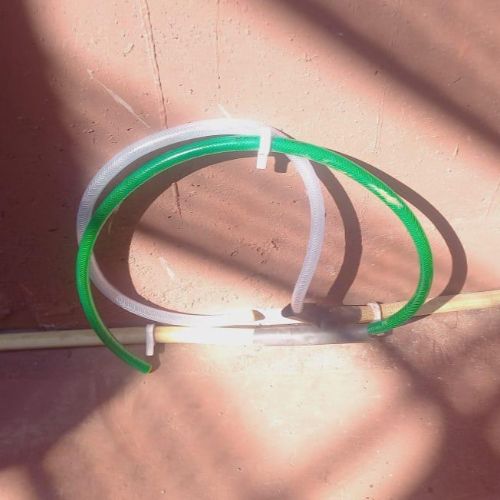
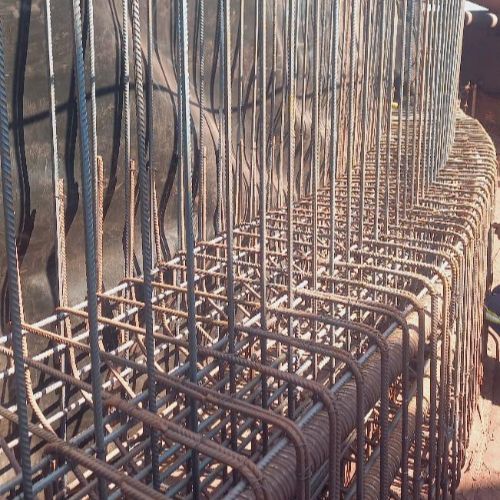
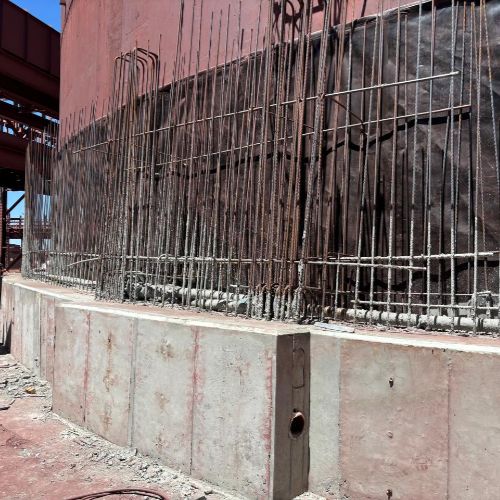
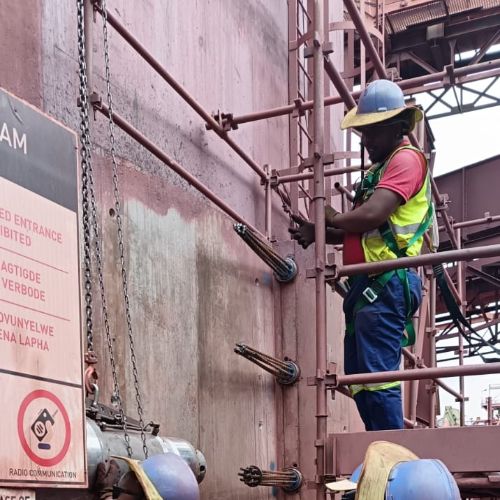
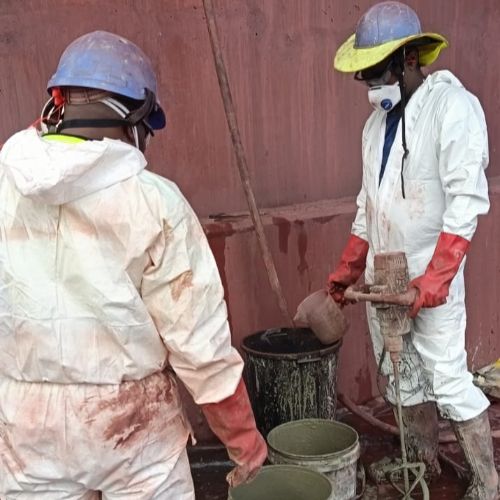
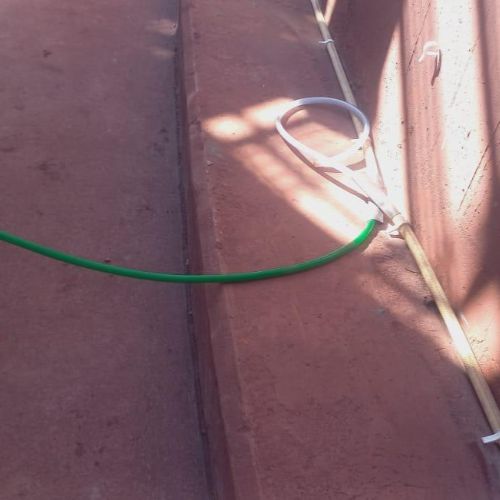
- In order to strengthen the tank walls and prevent any further movement the tank had to have an external post tensioned wall cast against the existing concrete wall of the tank. Before this could be done, the Sika Fuko Injection hoses were installed along the the full circumference of the wall, this was to seal the circumference of the wall as the tank was leaking due to the movement of the wall off the bearing. A cuspated HDPE lining was installed against the existing wall to allow for the movement of the new wall when the post tensioning was stressed. The new sliding bearings were installed for the new wall to bear onto. The new wall and ring beam was then cast and once cured the post tensioning system was stressed. Once the PT system was stressed and grouted, the cuspated HDPE lining was grouted as well.
Project Challenges
-
Access to site
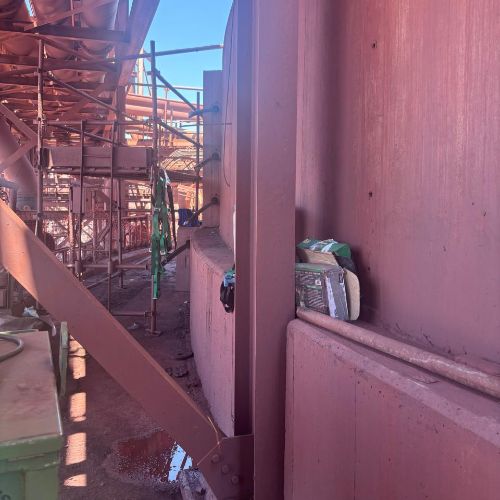
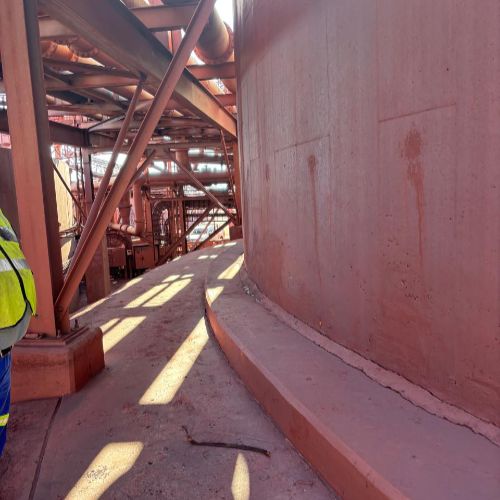
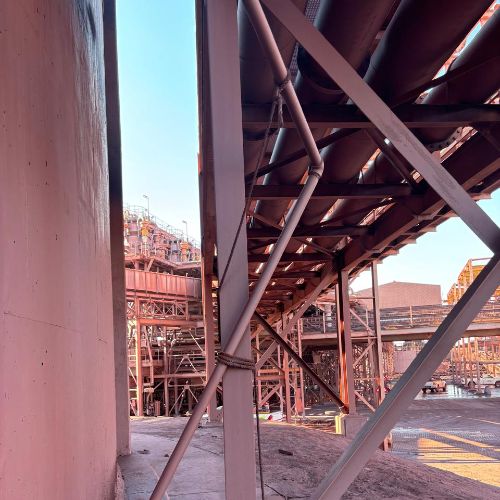
The tank was surrounding by extensive existing infrastructure which constrained the work area. The tank was located on to sloped elevation, which made walking around the tank quite dangerous. The tank was fully operational through the full duration of the project, making for a difficult working environment as the launder would often overflow onto the site team below and work would have to be halted. -
Environmental constraints
The environment was challenging to work in, extreme heat and dust made it difficult to work the full days hours. We ensured that the team took many water breaks and were monitored for dehydration and heat stroke. -
Access to work area
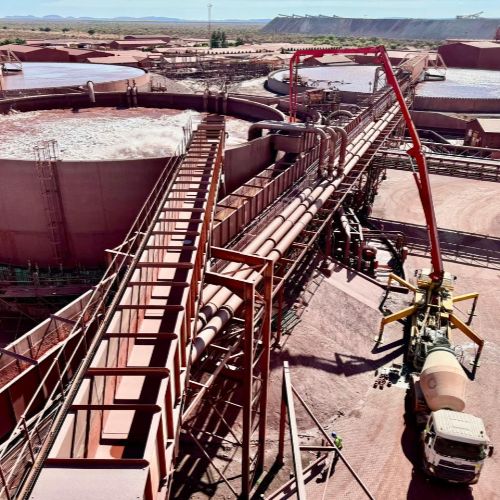
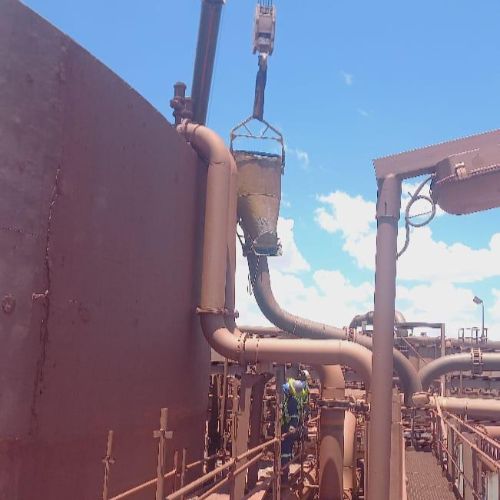
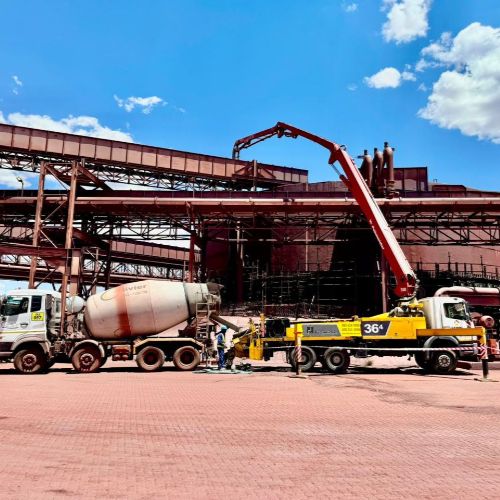
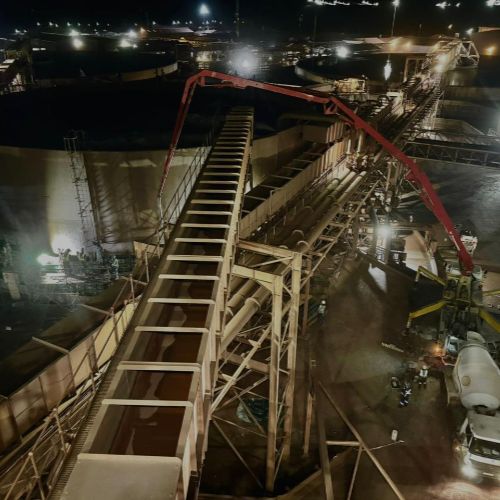
Due to the constraints of the existing infrastructure, pouring the concrete was extremely challenging as the concrete pump could not access everywhere. The ring beam had to be cast in sections using a "Banana" bucket and had to traverse a labyrinth of pipes and conveyors. The form work for the walls was a challenge as the shutters had to be anchored into the existing walls to keep them in position. The existing wall was also post tensioned so great care needed to be taken to ensure no existing tendons were compromised with these anchors.
Execution Highlights
A temporary walkway was built around the areas where the access around the tank was very narrow and very close to the sloping side to ensure safety.
On a few occasions the launder would overflow onto the work area where the concrete was ready to be cast. Once the water subsided, the team would have to remove the shutters and clean the area again in preparation for casting of concrete. This adding some time delays but was necessary to ensure the quality of the concrete was not compromised by the contaminated water.
When pouring the concrete the constraints of the existing infrastructure made access very difficult, a platform over the top of the pipes was built so that the bucket could be properly guided to cast the ring beam, the ring beam was cast in quarters to make it more manageable to cast with the bucket. When the walls were cast a concrete pump with a 36m boom had to be transported from Johannesburg to the site as there were no pumps available locally. With this boom we were able to extend the pump over the existing infrastructure to reach the work area, the full circumference of the wall was cast in one day.
The formwork system and the anchoring of the shutters to the existing wall was extensively checked to ensure that there would be no uplift of the shutter when concrete was poured.